Amazon Democratizes Custom Merchandise with Generative AI Integration in Shopping App

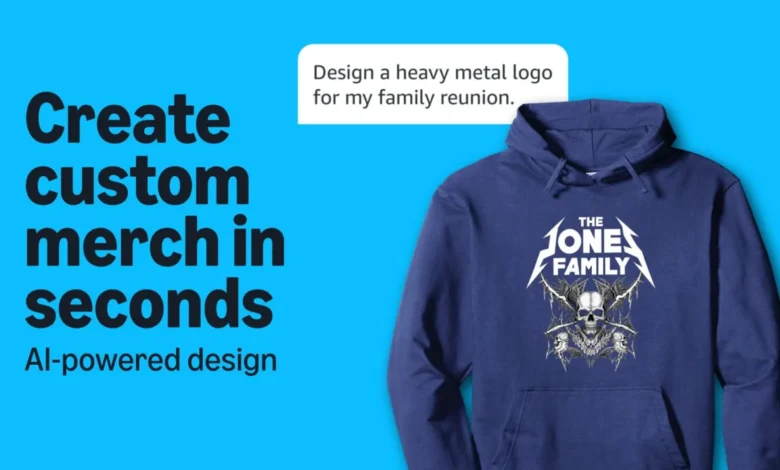
Amazon has officially signaled a major shift in the print-on-demand landscape by integrating generative artificial intelligence directly into its primary shopping application. This new feature, launched on Monday, allows U.S.-based customers to conceptualize, design, and order custom merchandise—ranging from apparel to drinkware—entirely through voice or text prompts processed by Alexa. By bypassing the need for graphic design proficiency or third-party design software, Amazon is positioning its "Merch on Demand" service as a mainstream consumer utility, directly challenging the business models of dedicated creator-economy platforms such as Redbubble, Bonfire, and Spring.
The Evolution of Print-on-Demand at Amazon
The move to integrate AI-driven design tools is the latest iteration of Amazon’s long-standing effort to corner the print-on-demand (POD) market. Amazon first introduced Merch by Amazon in 2015, initially conceived as a service for developers and content creators to monetize their brands through T-shirts and other apparel. Over the last decade, the program has evolved into "Merch on Demand," expanding its product catalog to include hoodies, sweatshirts, tumblers, and water bottles.
Historically, the POD industry has functioned as a B2C or B2B2C model, where creators upload their own high-resolution artwork to platforms. These platforms then handle the manufacturing, inventory management, and shipping. Amazon’s new integration disrupts this traditional flow by removing the "creator" middleman. By embedding an AI-powered design engine into the Shopping app, Amazon is effectively turning every casual shopper into a designer.
How the AI Design Process Functions
To access the new tool, users navigate to the Alexa icon within the Amazon Shopping app or search for the "customize" function. The process is designed to be conversational; users describe their desired aesthetic, subject matter, or theme to Alexa, which then renders a design based on those specifications.
The interface allows for iterative refinement. If a user is dissatisfied with the initial output, they can click suggested edits or provide follow-up text prompts to alter the composition, color scheme, or style. Once the user is satisfied, the design is applied to a pre-selected range of merchandise, including V-necks, long-sleeve shirts, polo shirts, quarter zips, jerseys, tank tops, and various drinkware.
Crucially, the entire fulfillment chain remains within the Amazon ecosystem. Once the design is finalized and the order is placed, Amazon utilizes its existing Prime logistics network to print and ship the product. This creates a friction-free experience that traditional POD platforms, which often rely on third-party shipping partners or slower manufacturing timelines, struggle to replicate.
Market Context and the Rise of AI-Generated Content
The global print-on-demand market was valued at approximately $7.8 billion in 2023 and is projected to experience a compound annual growth rate (CAGR) of over 25% through 2030, according to recent industry reports. Amazon’s decision to infuse this sector with generative AI comes at a time when consumer demand for "mass personalization" is at an all-time high.
However, this technological leap is not without controversy. The use of generative AI models to create commercial products has sparked significant debate regarding intellectual property, copyright, and the displacement of human artists. While Amazon’s tool is ostensibly aimed at "one-off" personal projects—such as family reunion shirts or personalized gifts—the scalability of this technology raises questions about the future of professional design work.
Artists and creative guilds have expressed growing concern over the last 18 months regarding how these AI models are trained. If an AI engine is trained on datasets that include the work of independent illustrators without consent or compensation, the resulting "custom" merchandise may inadvertently reflect the style or intellectual property of those artists. Amazon has not explicitly detailed the safeguards in place to prevent copyright infringement, though the company generally maintains strict intellectual property policies for its marketplace sellers.
Implications for Competitors and the Creator Economy
The competitive landscape for platforms like Redbubble and Fourthwall is likely to tighten significantly. These companies have historically relied on a "community-driven" model, where artists earn royalties on every sale of their uploaded designs. By pivoting toward an AI-first model, Amazon is moving away from the community-driven creator economy and toward a "utility-driven" model.
For the average consumer, the benefit is clear: lower costs and higher accessibility. Professional designers, however, may see a decrease in demand for entry-level graphic design services. If a consumer can generate a high-quality, professional-looking design for a gift in seconds for free, the perceived value of commissioning a human illustrator for a simple T-shirt design drops significantly.
Furthermore, this development solidifies Amazon’s role as an "everything store" that controls not just the platform and the payment, but the creation of the goods themselves. By capturing the design phase, Amazon increases the "stickiness" of its shopping app, keeping users within its ecosystem for longer periods and gathering more data on consumer preferences, design trends, and stylistic choices.
Regulatory and Ethical Considerations
As the deployment of AI in commercial retail continues to expand, regulators in the United States and the European Union are beginning to scrutinize the impact of automated content generation. While Amazon’s current offering is limited to the U.S. market, the company’s global reach suggests that a rollout to other regions is likely once the technology matures and regulatory frameworks are better established.
There is also the matter of quality control. AI, while impressive, is prone to "hallucinations"—errors in anatomy, text rendering, or logic. Amazon will need to manage customer expectations regarding the fidelity of the final printed product versus the digital preview. If the gap between the AI-generated preview and the physical product is too wide, the return rate—already a significant cost factor for Amazon—could increase.
Future Outlook and Strategic Expansion
Looking ahead, the integration of AI into Amazon’s shopping experience is likely to expand beyond just apparel and tumblers. Industry analysts suggest that if the current feature gains traction, Amazon could theoretically extend this capability to home decor, personalized stationery, or even customized electronics accessories.
The financial incentive for Amazon is twofold: it drives sales of its physical goods and increases the utilization of its printing facilities, while simultaneously deepening the integration of Alexa into the daily shopping habits of its users. For consumers, the barrier to entry for creative expression has never been lower. For the industry at large, the move marks a definitive shift where the value proposition of a product lies less in the "design" and more in the "prompt."
As Amazon continues to refine this tool, the focus will likely turn toward enhancing the editing capabilities and increasing the variety of base products available for customization. Whether this move effectively commoditizes digital art or simply opens new creative avenues for the average shopper remains to be seen. What is certain, however, is that the integration of generative AI into the shopping experience has moved from a novelty experiment to a core pillar of Amazon’s retail strategy, signaling a profound shift in how consumers interact with the products they buy.